I designed some handouts to be placed next to the machines in the exhibition. Just a clear & simple design that people can pick up & take away.
Showing posts with label Brief 2 - Electronica. Show all posts
Showing posts with label Brief 2 - Electronica. Show all posts

30.4.13
glitchy
I've been experimenting with vinyl designs and made some interesting visuals. They're quite glitchy in appearance but it's appropriate to the electronic music scene. It fits in with how electronic music is made up of several elements. I like the juxtaposition of the shapes and the colours that sit harmoniously in the design. I put the imagery into the poster designs too but think i'll stick with the original designs in order to keep the clarity.
12.4.13
new colour scheme
After feedback and consideration I've decided to add colour to the designs as it fits in with the concept of visual sound. I think they work much better as the visual aesthetic is more appealing and conceptually fitting. The pantones i've gone for are:
green - c66m0y50k0
grey - c0m0y0k30
purple - c61m81y0k0
green - c66m0y50k0
grey - c0m0y0k30
purple - c61m81y0k0
11.4.13
potential vinyl design
As part of the deliverables I'm designing a vinyl sleeve cover that will be sold at the exhibition with a few classic electronic songs from the 1970's to today. To go with the copper theme i've designed this which could potentially work..


10.4.13
copper
In order to draw people into the exhibition I've created a series of 3 posters, one of them being just image. That way it acts as a bit of a teaser making people curious to find out more. These are the designs I think I'll be going with as they work quite well in terms of composition and as a triptych.
25.3.13
wire development
The later designs are too busy with the wired type but i definitely feel like the original wired type works better. The copper wired visual works quite well in terms of an aesthetic for the brief. It's conceptual and stands out quite a lot from the page. I'll develop designs for this and see what more i can do with this.
23.3.13


22.3.13
poster development
Experimenting with poster visuals using the new wired effect. As a design i feel it looks to busy so i'll continue to play around image. I do however like the type on the poster but again i definitely needs refining.
20.3.13
visuals
I've been experimenting with visuals, which have been inspired by the electronics behind the machines that create electronic music. I wanted to use this imagery to create a identity for the exhibition and use experimental type for the Oramics to Electronica. Using the effect of wiring i created this joined up type that could sit quite nicely on the posters...


15.3.13
image
Experimenting with some visuals and layout for the poster designs to see what i could potentially use for the aesthetic for the brief. Although i like the idea of using this sort of shape for the designs i feel there's a lot more potential and so more development is needed.
5.3.13
EMS
The exhibition highlights the work of three British studios that produced electronic music in the 1960s and 1970s. Electronic Music Studios (EMS) was one of three, the others being Daphne Oram with the Oramics machine and BBC Radiophonic Workshop introducing electronic effects to the public through radio and television.
Electronic Music Studios (London) Ltd. was formed in 1969 by Dr. Peter Zinovieff to market innovative ideas arising from his private studio and interest in musical applications of computers. Over the next ten years many seminal products were released and many talented designers worked for the company. EMS had its own peculiar brand of British eccentricity which could be both endearing and annoying, but should be viewed in the context of true pioneering. It is easy to copy and follow others, but not to think up new ideas in the first place and EMS had no shortage of originality. The EMS influence was significant and can be traced into many contemporary products. EMS is best known for its VCS3/Synthi A synthesizers (which will be displayed at the exhibition) but that was just the tip of the iceberg.
The BBC Radiophonic Workshop introduced electronic compositions and released many CDs, some of which include:
Doctor Who at the BBC Radiophonic Workshop Volume 1 - The Early Years
Pink Floyd - Meddle, Obscured by Clouds, Dark Side of the Moon, Animals, Wish You Were Here
Pete Townsend/The Who - Who's Next
Edgar Froese/Tangerine Dream - all early albums
Malcolm Cecil/TONTO - Zero Time, It's About Time
Electronic Music Studios (London) Ltd. was formed in 1969 by Dr. Peter Zinovieff to market innovative ideas arising from his private studio and interest in musical applications of computers. Over the next ten years many seminal products were released and many talented designers worked for the company. EMS had its own peculiar brand of British eccentricity which could be both endearing and annoying, but should be viewed in the context of true pioneering. It is easy to copy and follow others, but not to think up new ideas in the first place and EMS had no shortage of originality. The EMS influence was significant and can be traced into many contemporary products. EMS is best known for its VCS3/Synthi A synthesizers (which will be displayed at the exhibition) but that was just the tip of the iceberg.
The BBC Radiophonic Workshop introduced electronic compositions and released many CDs, some of which include:
Doctor Who at the BBC Radiophonic Workshop Volume 1 - The Early Years
Pink Floyd - Meddle, Obscured by Clouds, Dark Side of the Moon, Animals, Wish You Were Here
Pete Townsend/The Who - Who's Next
Edgar Froese/Tangerine Dream - all early albums
Malcolm Cecil/TONTO - Zero Time, It's About Time
4.3.13
shapes
Whilst doing some research into the oramics machine I found some really interesting shapes that are painted onto film from the machine. I think these shapes have a lot of potential in terms of visuals for designs and context and could work well with screen print. I'll continue to search for appropriate visuals that will be incorporated into the design process for promotion.


oramics machine
A brief history of the oramics machine:
Daphne Oram attended Sherborne School where she studied music, and subsequently was accepted for the Royal College of Music in 1942. She joined the BBC as a Junior Programme Engineer, drawing on her musical talent and technical skills she had learned from her brother, an electrical engineer, with whom she had built radio transmitters and receivers as a child. Her responsibilities at the time included sequencing the playback of classical recordings, which required the seamless transition every four minutes between 78 RPM discs. Engineers had to sync and mix the discs that made up the long symphonies to play them in full live, a technique almost identical to mixing two vinyl records today.
One of the features of joining the BBC at the time was the scope and depth of the training programme offered to new employees. Oram attended a residential course in 1944 which focussed on broadcast engineering. During the course a particular device caught her attention, the Cathode Ray Oscilloscope. The machine is used to display the characteristics of waveforms—in this case sound waves—graphically. Characteristically keen to advance her understanding of the technology for her own creative ends, she asked the tutor at the time whether it would be possible to reverse the process of the oscilloscope, drawing the waveform in and thereby controlling the harmonic content of the soundwave. He replied "no," a word which seems to have been interpreted by Oram as a direct challenge. It was not long after this encounter that she began to refer to the idea for a "graphical music" system. She resigned to set up her own studio, the Oramics Studios for Electronic Composition, and to begin work in earnest on her system for graphical music, the Oramics Machine.
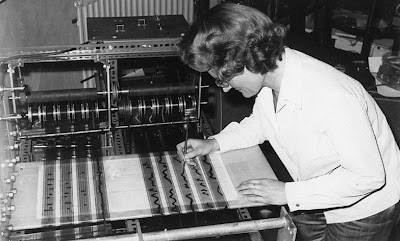
Daphne Oram attended Sherborne School where she studied music, and subsequently was accepted for the Royal College of Music in 1942. She joined the BBC as a Junior Programme Engineer, drawing on her musical talent and technical skills she had learned from her brother, an electrical engineer, with whom she had built radio transmitters and receivers as a child. Her responsibilities at the time included sequencing the playback of classical recordings, which required the seamless transition every four minutes between 78 RPM discs. Engineers had to sync and mix the discs that made up the long symphonies to play them in full live, a technique almost identical to mixing two vinyl records today.
One of the features of joining the BBC at the time was the scope and depth of the training programme offered to new employees. Oram attended a residential course in 1944 which focussed on broadcast engineering. During the course a particular device caught her attention, the Cathode Ray Oscilloscope. The machine is used to display the characteristics of waveforms—in this case sound waves—graphically. Characteristically keen to advance her understanding of the technology for her own creative ends, she asked the tutor at the time whether it would be possible to reverse the process of the oscilloscope, drawing the waveform in and thereby controlling the harmonic content of the soundwave. He replied "no," a word which seems to have been interpreted by Oram as a direct challenge. It was not long after this encounter that she began to refer to the idea for a "graphical music" system. She resigned to set up her own studio, the Oramics Studios for Electronic Composition, and to begin work in earnest on her system for graphical music, the Oramics Machine.

1.3.13
moffitt moffitt
No More is an independent exhibition set up by Moffitt Moffitt. It's a study of excess and restraint within contemporary music. What I like about this exhibition is the clarity and simplicity of the black and white posters on the wooden table with the minimal design of the room. Visually it works really well with the images in high contrast. The images used are really intriguing which is something I want to work with for the Electronica exhibition. Photography is definitely something I'll be incorporating into the designs.
15.2.13
Exhibition design
Inventery studio:


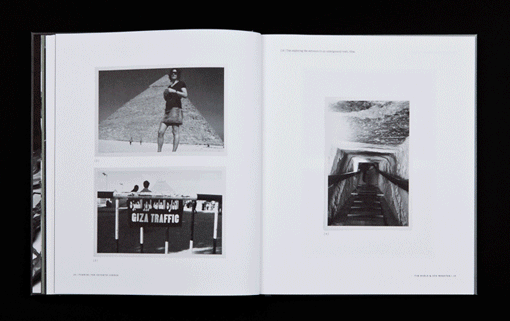
Published by Blain|Southern, Tim Noble & Sue Webster Turning
the Seventh Corner, is a 136 pp book which documents the conception and
realisation of the artists’ recent exhibition at Blain|Southern Berlin.
A monumental, site-specific installation, Turning the Seventh Corner
was created
by Noble and Webster in collaboration with the architect
David Adjaye and is the artist’s most ambitious project to date.
The
book itself documents the entire process behind the work, from its
conception, through working sketches, development and installation
concluding with the work installed in the gallery. Each distinctive
section of the book has its own unique style. Printed on two paper
stocks the book is case bound and pressed with a white foil title on the
cover. The typography reflects the physicality of the installation,
each title turning one of seven corners.


Central Saint Martins College of Art and Design
2009-10 campaign
Praline designed and art directed the whole recruitment campaign.


Colour Space


Richard Rogers
+ Architects
From the House to the City
Exhibition at the Urban Redevelopment Authority, Singapore
21.05.11 to 20.08.11
Praline designed the identity, signage, handout and all graphics for this show in Singapore.
‘Taken out of the usual museum context and set within a public
atrium, ‘From the House to the City’ in Singapore has successfully
created a new exhibition experience in a space that is at once both
contained yet spontaneous. The robust use of colours, thematic
programming and generous display of delicate architectural models
transformed our office atrium into a spectacular showcase of ideas. This
exhibition also attracted an exceptionally diverse range of visitors –
from the professionals to students, tourists and curious passersby.’


Central Saint Martins College of Art and Design
2009-10 campaign
Praline designed and art directed the whole recruitment campaign.


Colour Space
Beijing Design Week 2012
Colour Space, an installation by design studio Praline and
photographer John Short explores the relationship between sound, colour
and form.
The exhibition takes an existing idea, of sound being represented by
colour, one step further and shows how various sound frequencies create
their own individual patterns. Passing 7 frequencies that correspond to
the 7 musical notes through coloured pigment created unique ‘audio
explosions’.25.1.13
Paul McCartney
YES were commissioned to conceive and design a series of key McCartney re-releases. This involved creative direction, branding, packaging, editorial consultancy and publication design.
I think the visual aesthetic for this works really nicely. A range of material and stock has been used here and I definitely aim to experiment with this within the Electronica brief as I wish to do a publication on the history of electronic music. I wanted to play around with designs in which I could feature audio cd's with the journey from old electronic music to the current and this has definitely inspired me in terms of experimentation.
I think the visual aesthetic for this works really nicely. A range of material and stock has been used here and I definitely aim to experiment with this within the Electronica brief as I wish to do a publication on the history of electronic music. I wanted to play around with designs in which I could feature audio cd's with the journey from old electronic music to the current and this has definitely inspired me in terms of experimentation.
21.1.13

Subscribe to:
Posts (Atom)